Bringing History to Life: The MCHR Freedom Tour Comes to Detroit
June 9, 2026
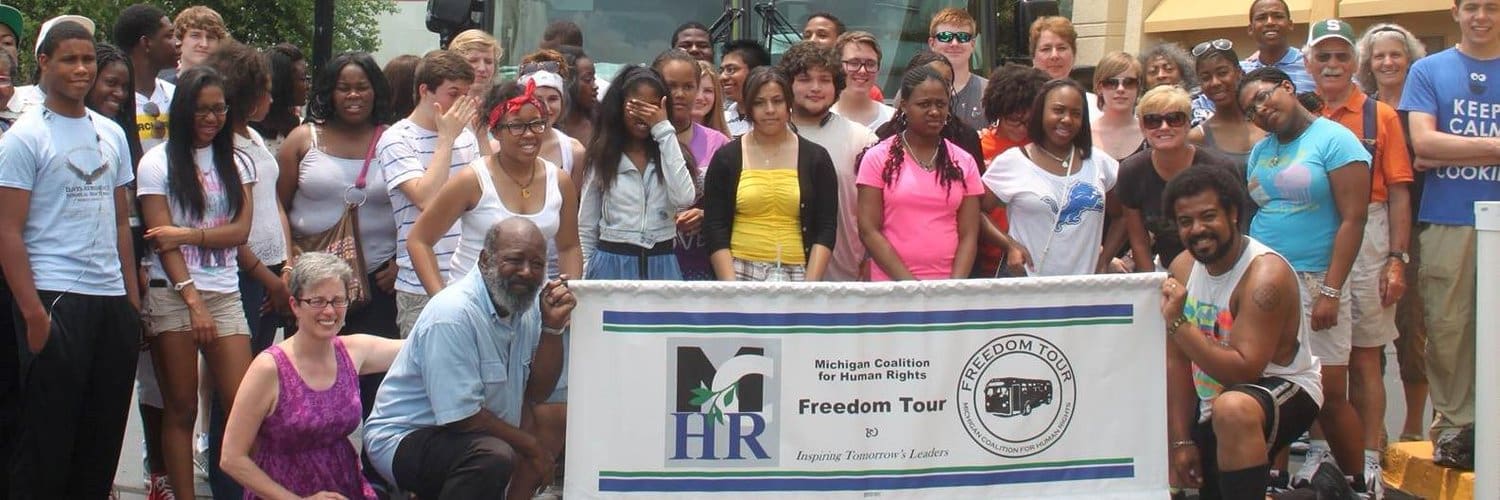
The Michigan Coalition for Human Rights (MCHR) Freedom Tour is a program that takes Metro Detroit youth out of the classroom and into the streets, churches, neighborhoods, and landmarks where civil rights history was actually made.
This summer, the Freedom Tour is coming home. For 2026, MCHR brings the program directly to Detroit — and they’re looking for both students and community members to be involved.
What Is the Freedom Tour?
Founded in 1989 by MCHR, the Freedom Tour was born out of a simple but powerful belief: that young people who understand history are better equipped to change the future. Named in honor of the Freedom Riders — the civil rights activists who rode buses into the segregated South in 1961 to challenge unjust travel laws — the program carries forward that legacy of courageous, community-driven activism. Over the decades, the tour has brought together high schoolers, community members, elders, and educators to explore Michigan’s deep civil rights roots.
What Participants Can Expect
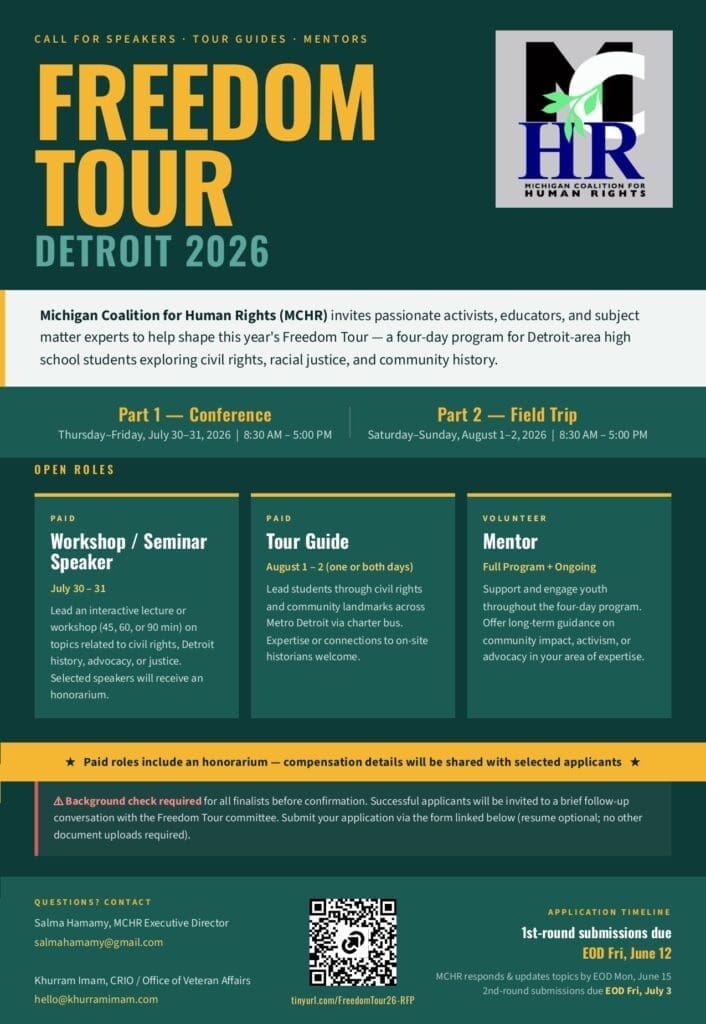
The 2026 Freedom Tour runs from Thursday, July 30 through Sunday, August 2, and is structured as a two-part program.
Part 1 (July 30–31) is a two-day in-person conference featuring guest speakers, workshops, and interactive educational sessions. Topics range from Detroit’s Great Migration history and housing segregation to food justice, youth-led movements, and voting rights. The sessions are designed to be hands-on and discussion-driven, connecting historical events to issues participants are navigating in their own communities today.
Part 2 (August 1–2) takes everything off the page and onto the streets. Participants board a charter bus for a two-day guided tour of civil rights and community landmarks across Metro Detroit. The itinerary spans the city — from the Birwood Wall, a 1941 segregation barrier in northwest Detroit, to the Boggs Center on the east side, honoring the legacy of community organizers James and Grace Lee Boggs. Stops include historic churches, sites of the 1967 Uprising, urban agriculture hubs, and murals that mark the ongoing struggle for justice in Detroit’s neighborhoods.
Meals are provided each day, and every stop is contextualized historically, politically, and personally to help participants see these places as living chapters in a continuous story.
Student Applications
This year’s program is geared toward high school students from the Detroit metro area who are currently in or have just completed 9th through 12th grade. The application deadline is July 10, 2026. But the spirit of the Freedom Tour has always been broader than any single age group. The program reflects a belief that civil rights education belongs to everyone — and that the most powerful conversations happen when generations learn together. Students can apply here or scan the QR code in the flyer below.

Support the Freedom Tour
Detroit is civil rights history. The neighborhoods, buildings, and community spaces on this tour’s itinerary are sites where organizing still happens, where food justice advocates are doing daily work, where murals still speak, and where the questions the civil rights movement raised are still very much alive. Programs like the Freedom Tour matter because they create the conditions for young people to see themselves as part of that continuum. If you are interested in playing a role as a speaker (for a workshop or seminar), the tour guide, or as a mentor, download the full RFP below to read more!
Ready to join the Freedom Tour? The RFP application link is here, and can also be accessed through the QR code in the flyer below.
Why It Matters
Detroit is civil rights history. The neighborhoods, buildings, and community spaces on this tour’s itinerary are sites where organizing still happens, where food justice advocates are doing daily work, where murals still speak, and where the questions the civil rights movement raised are still very much alive. Programs like the Freedom Tour matter because they create the conditions for young people to see themselves as part of that continuum.
Stay connected with the Freedom Tour Organizers and reach out directly to the organizing team. Salma Hamamy can be contacted via email at salmahamamy@gmail.com; Khurram Imam can be contacted via email at hello@khurramimam.com.
Khurram Imam is the Director of Zaki Impact Consulting, where he helps governments, nonprofits, and foundations design strategies and programs that are equitable, measurable, and built to last. His work sits at the intersection of public health, workforce development, and community systems. Connect with him on LinkedIn or explore his services at khurramimam.com/services.
